People do not wake up wanting “legal education.” They want to know what they can do when rent, work, debt, or a consumer issue becomes stressful.
Legal access · product · shipped
Legally Lite
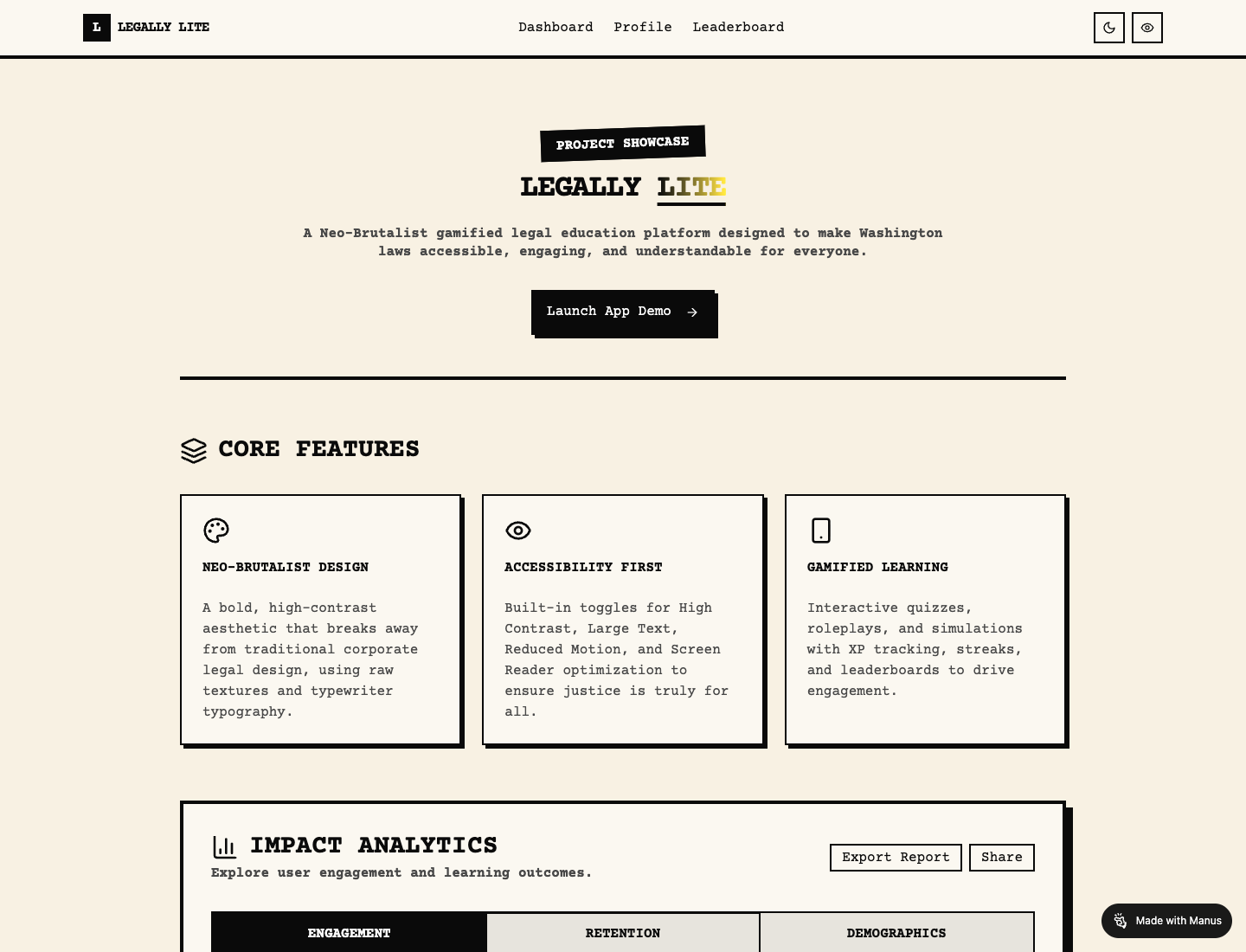
A legal education platform that turns housing, employment, and consumer rights into state-specific challenges and mini-games.
Why this exists
Most people meet the law when something has already gone wrong. The product question was simple: can legal education feel less like a wall of text and more like practice for a real decision?
Legally Lite explored legal access through small interactive scenarios. Instead of asking users to read everything first, it lets them learn by answering, failing safely, and seeing how rights change by state.
0 → 1 product thinking
Start with a narrow legal moment, then make the learning loop repeatable.
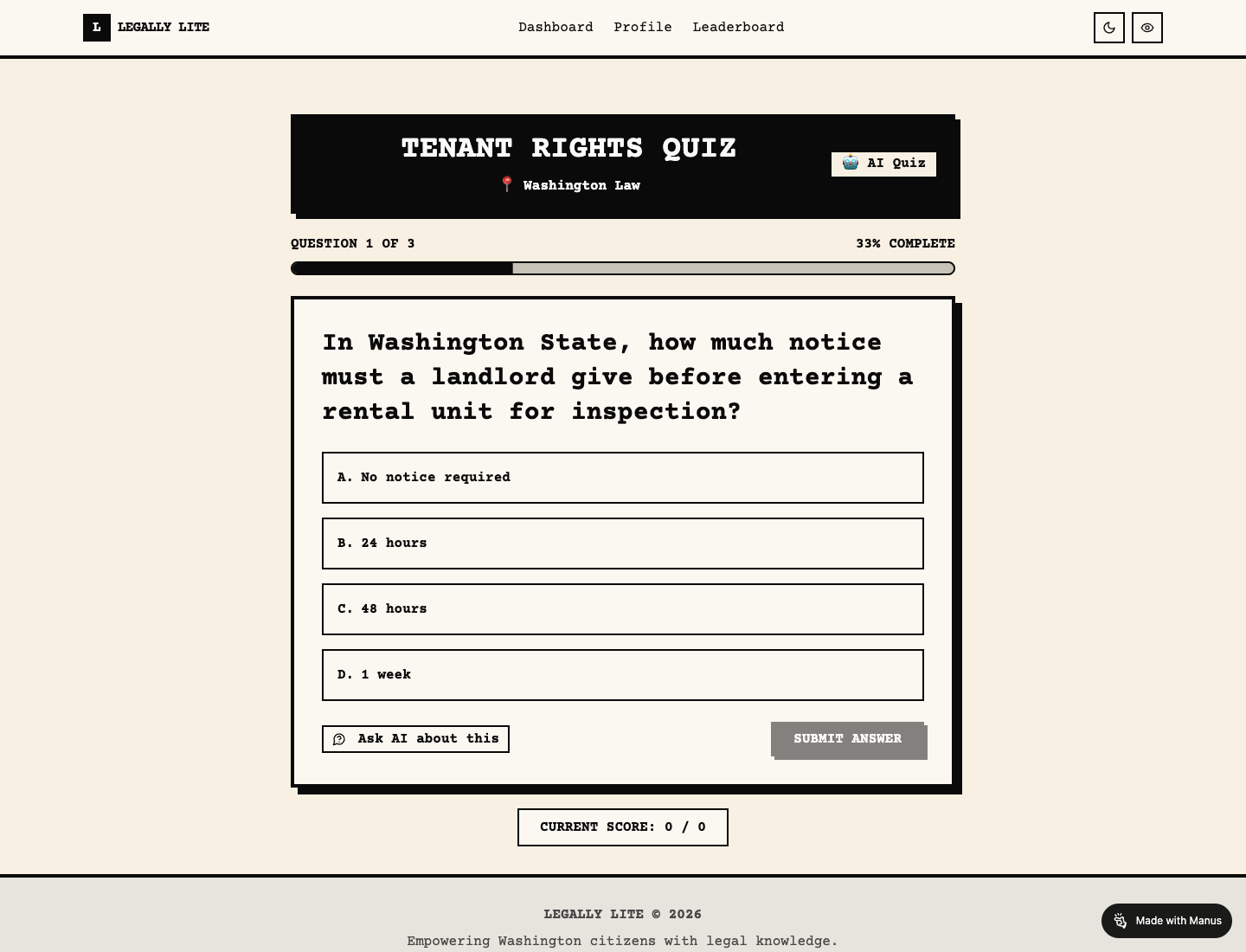
The first wedge was a tenant-rights quiz for Washington law: specific enough to be useful, small enough to ship, and structured enough to expand into other rights areas.
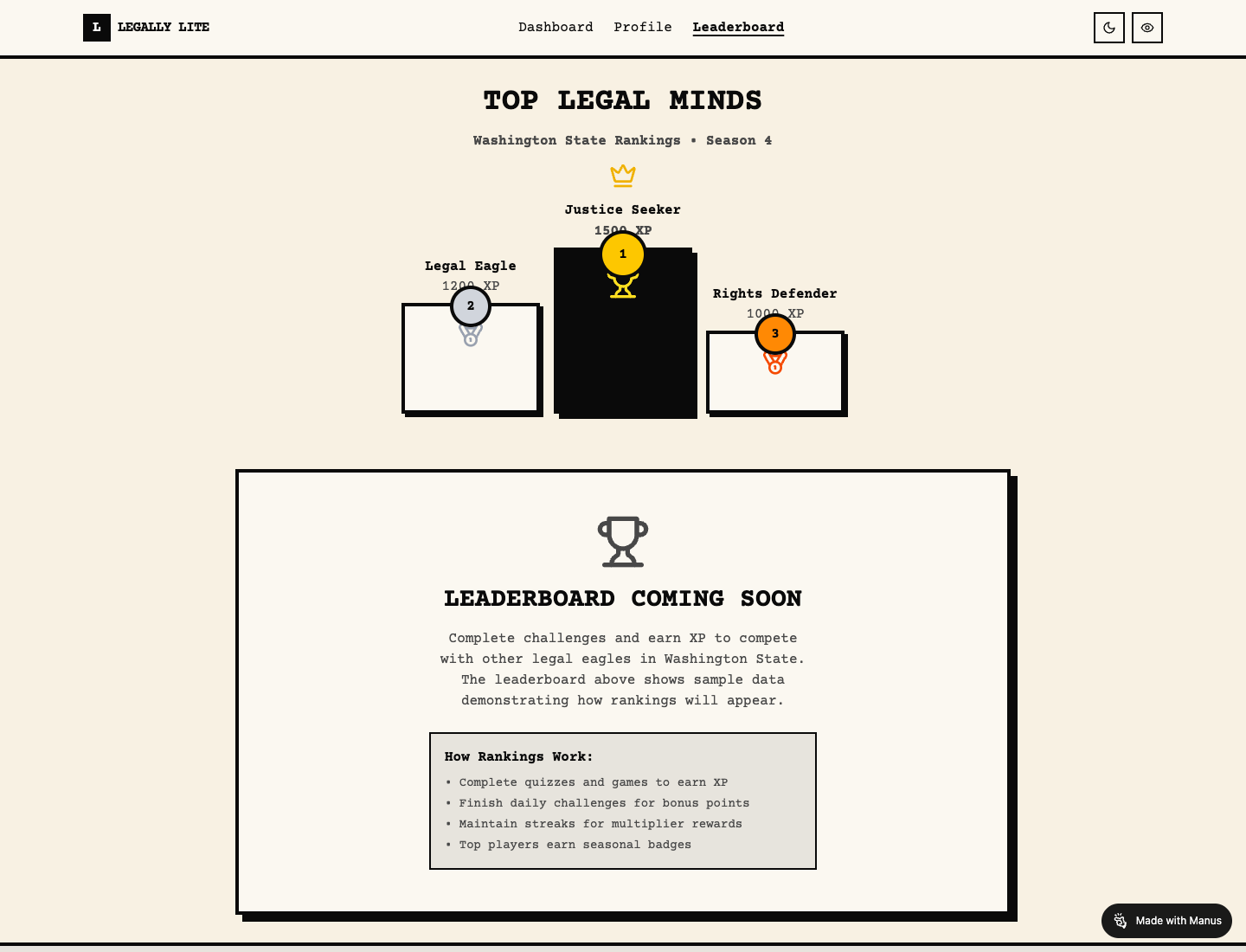
Quizzes, XP, badges, leaderboards, and AI help were not decoration. They were the engagement loop: learn a rule, test yourself, ask a follow-up, come back.
The hackathon result gave the product a useful outside check: the prototype was judged on creativity, pain-point relevance, working demo, and production readiness.
Product bet
People remember rules better when the rule is attached to a situation.
Legal information is often technically public but practically hard to use. People need plain language, state specificity, and enough context to know what applies to them.
Break legal knowledge into challenge-based flows: rights, choices, consequences, and next steps. Keep the interaction lightweight enough for someone who is not looking for a law school lecture.
I can turn domain complexity into a product surface, especially when legal accuracy, usability, and user anxiety all matter at once.