Aviation mental health sits inside a system of stigma, certification pressure, safety obligations, and fear of disclosure. A generic wellness chatbot does not understand that context.
AI ethics · aviation mental health · CSCW 2026
Digital copilots for pilot mental health
A research project on where AI support might help, where it can harm, and why “just build a chatbot” is the wrong starting point for high-stakes mental health contexts.
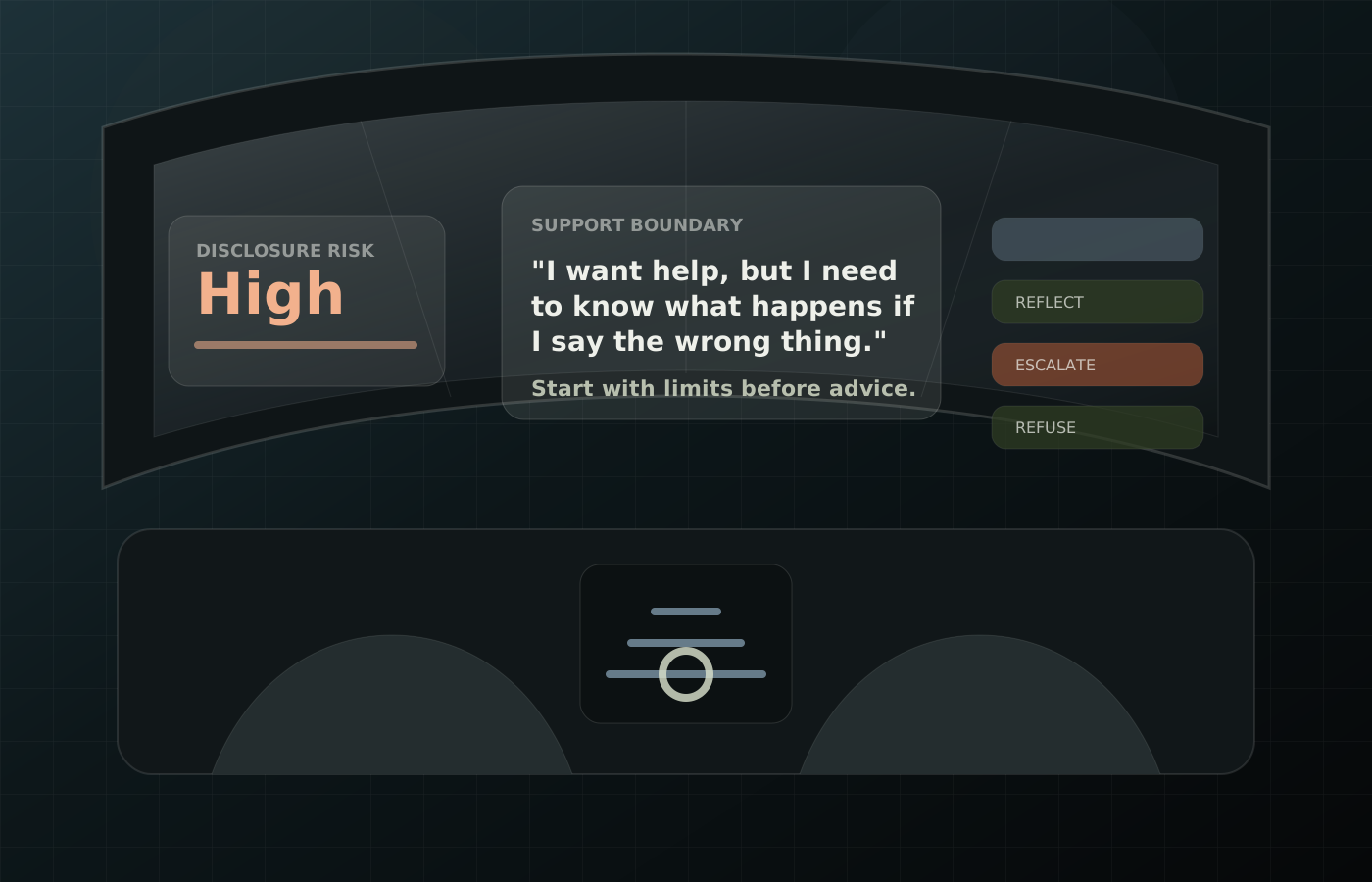
Overview
This project looks at a very specific question: what happens when generative AI enters a mental health context where the user may already be afraid of disclosure, professional consequences, and institutional judgment?
For pilots, seeking mental health support can carry perceived career risk. That changes the design problem. The interface is not just a support surface. It is also a trust surface, a disclosure surface, and sometimes a liability surface.
Research question
Can an AI system offer support without making the user less safe?
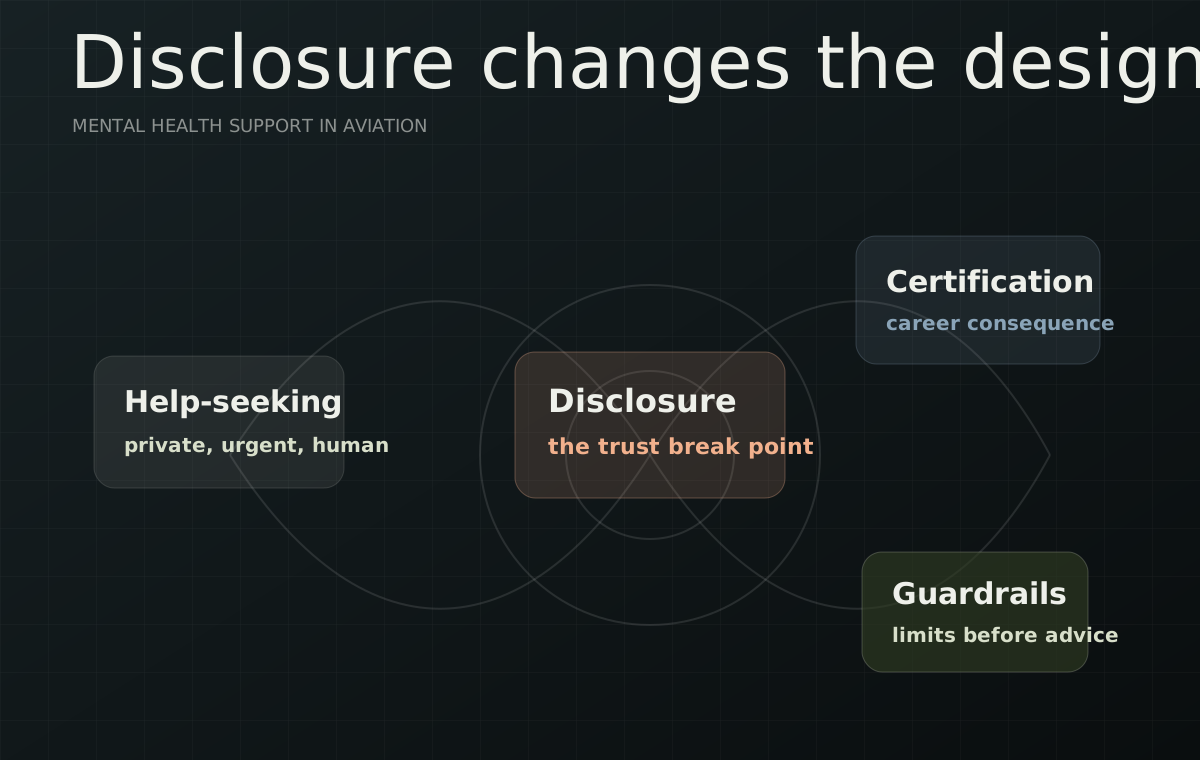
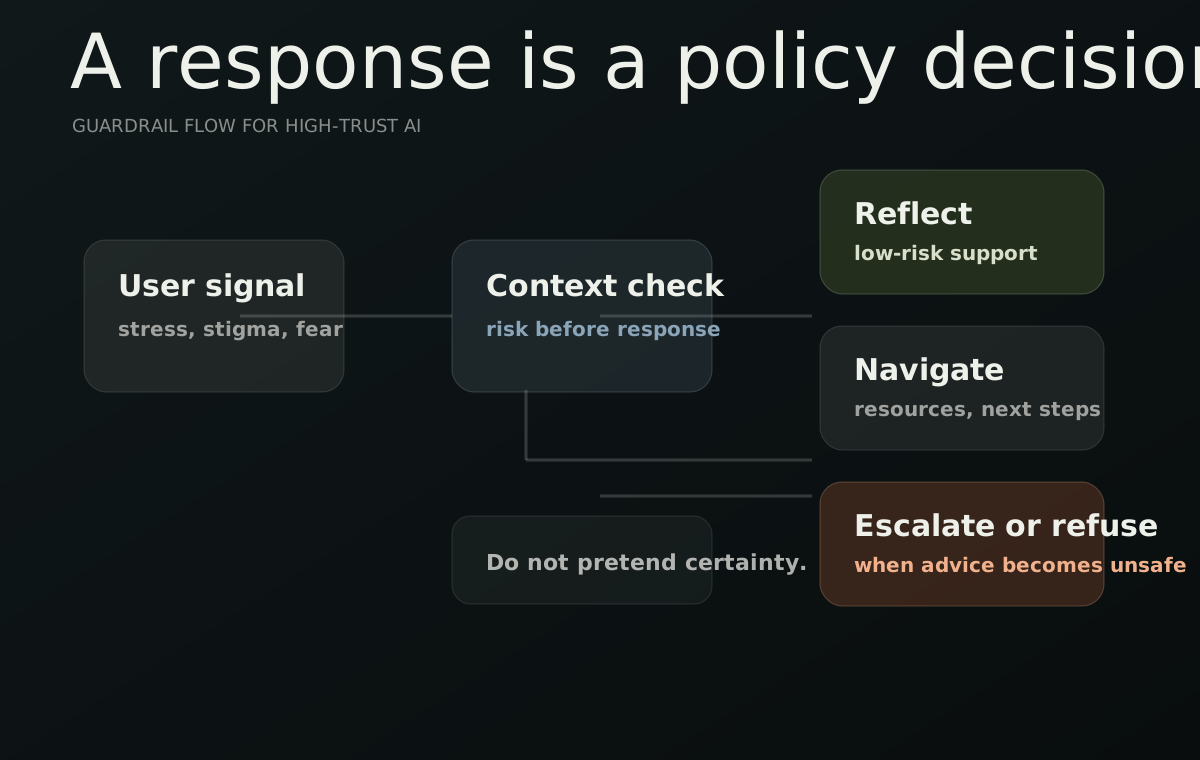
Where AI could help with reflection, triage, resource navigation, and early support, and where it should slow down, redirect, or refuse to act.
Users may want privacy, immediacy, and nonjudgmental support. Institutions may need safety, accountability, and escalation. The hard part is not pretending those needs are aligned.
Process
I treated the chatbot less like a product demo and more like a probe: something that could help expose user expectations, risk boundaries, and the kinds of answers that become dangerous when the stakes are high.
The work moved between literature, scenario design, AI interaction experiments, policy context, and synthesis. The output was not “AI should replace care.” It was a clearer map of the moments where support tools need strong boundaries.
01
Mapped the aviation mental health context and disclosure risks.
02
Designed exploratory AI interactions around stress, stigma, and help-seeking.
03
Studied where responses felt useful, evasive, unsafe, or overconfident.
04
Synthesized guardrail needs for responsible AI support in high-trust systems.
What the work clarified
The product question is not “can AI respond?” It is “when should it not?”
High-stakes AI design needs humility. A system can sound supportive and still create risk if it does not understand disclosure, escalation, and user vulnerability.
This is where my legal background matters. I notice policy, liability, incentives, and institutional behavior alongside the user experience.
I want to keep building depth in AI safety and AI ethics through research that stays close to real human and institutional consequences.